
Atmospheric Sciences in the Anthropocene
University of Strasbourg, France
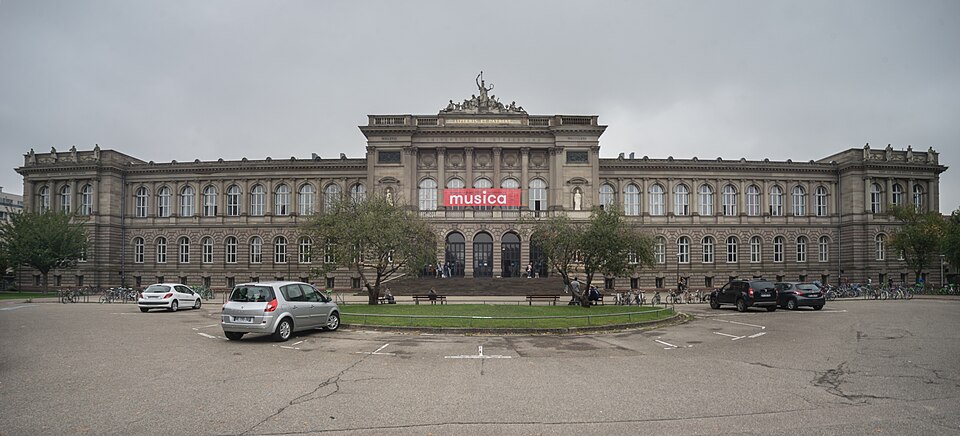
University of Strasbourg, France
General Description
At the beginning of the 21st century atmospheric scientists coined the term ‘Anthropocene’ to describe a new geological epoch of the Earth, characterised by an increasing human influence on the global environment. Within a few decades, they argued, human beings had brought about changes to the Earth of magnitudes that usually have taken place over thousands, or millions, of years. Anthropogenic climate change figured prominently among these changes. Given that human beings have already intervened in the Earth system, it may at some point be necessary, they argued, to take deliberate corrective action and do “large-scale geo-engineering projects” and “optimize” climate.
The course will critically discuss the notion of Anthropocene and the idea of geo-engineering, or climate engineering, from both a historical and contemporary perspective. The historical part of the course explores the emergence of the environmental sciences and environmentalism during the Cold War, examines the links between military research and the environmental sciences, and traces the historical development of the on-going debate about climate change. The main part of the course will focus on recent debates about climate engineering, asking questions like: Who advocates technological solutions to the current climate crisis? Which institutions support, justify and finance this kind of research? What are the alternatives to technological fixes? Are there different ways to relate to the Earth than by large-scale technological intervention?
- Bonneuil, Christophe and Jean-Baptiste Fressoz, The Shock of the Anthropocene: The Earth, History, and Us (London: Verso, 2017).
- Chakrabarty, Dipesh, The Climate of History in a Planetary Age (Chicago: Univ. Chicago Press, 2021).
- Crutzen, Paul J. (2006), “Albedo enhancement by stratospheric sulfur injections: A contribution to resolve a policy dilemma?”, Climatic Change 77, 211-220.
- Dias, Pablo Ribeiro, Climate Changed: The Science of Sustainability and How Each of Us Can Do Our Part (Ashville, NC: Otterpine, 2025).
- Fleming, James Rodger, Fixing the Sky. The Checkered History of Weather and Climate Control (New York: Columbia University Press, 2010).
- Latour, Bruno, Down to Earth: Politics in the New Climatic Regime (Cambridge, UK: Polity Press, 2018).
- Latour, Bruno, Facing Gaia: Eight Lectures on the New Climatic Regime (Cambridge, UK: Polity Press, 2017).
- Ritchie, Hannah, Clearing the Air: A Hopeful Guide to Solving Climate Change in 50 Questions and Answers (Cambridge, MA: MIT Press, 2026).
- Schubert, Julia, Engineering the Climate: Science, Politics, and Visions of Control (Mattering Press, 2021).
- Wagner, Gernot, Geoengineering. The Gamble (Medford: Polity Press, 2021).
- Weart, Spencer, The Discovery of Global Warming, second edition (Cambridge: Harvard University Press, 2008).
Possible Thesis Topics
History, sociology and philosophy in the area of climate change, climate engineering, and the Anthropocene.
Instructor
The course will be taught by Prof. Matthias Dörries (dorries@unistra.fr) in the months of February and March (20h). In addition he will teach a course on methodology (10h).
Contact
University of Strasbourg, International Welcome e-desk: international-welcome.unistra.fr