
Boundary Concepts in the Sciences
University of Namur, Belgium
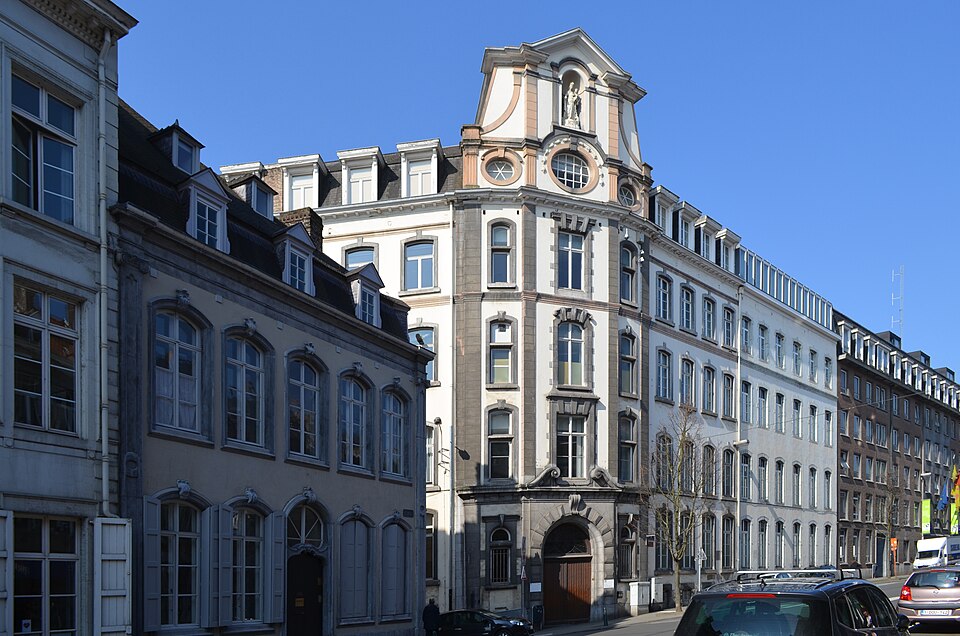
Université de Namur, Belgium
General Description
Scientists often use concepts that are also used in non-scientific circles: “information,” “code,” “heritage,” “point of view,” “healing,” “new”… These “boundary concepts” can teach us a lot about what constitutes the difference between scientific and other-than-scientific practices, be that pseudo-sciences, politics, art or legal reasoning. At UNamur, boundary concepts are studied across a variety of sciences – physics, biology, medicine and the human sciences – in order to situate those sciences within society at large.
Research Centre
SPiN (Science & Philosophy in Namur) is a research centre that brings together philosophers and scientists to examine science in all its diversity, crossing epistemological, metaphysical, political and ethical approaches. ESST students take part in SPiN’s weekly research seminars and present their own work in progress at mini-conference meetings, receiving feedback from other students and researchers.
Elective Structure
Assessment is based on an oral exam drawing on a reading assignment in epistemology and philosophy of science. All compulsory activities are in English (some optional extra-curricular activities may be in French). No more than two or three students are admitted per year, to ensure high-quality supervision.
Bibliography and other information
Potential Thesis Topics
- Does genetics determine human behaviour?
- Are chemical properties emergent properties?
- Can we use the analogy argument to study plants?
- Can science account for traditional medicines?
- What is friendship for a sheep?
Core Literature
Despret (2016) What Would Animals Say if We Asked Them the Right Questions?, University of Minnesota Press. Hacking (1981) Do we see through a microscope?, Philosophical Quarterly 62. Keller (2002) The Century of the Gene, Harvard University Press. Star & Griesemer (1989) Institutional Ecology, ‘Translations’ and Boundary Objects, Social Studies of Science.
Staff Involved in the Elective
Olivier Sartenaer (philosophy of physics), Gaëlle Pontarotti (philosophy of biology), Juliette Ferry-Danini (philosophy of medicine) and Thibault De Meyer (philosophy of animal sciences).
Accommodation
Housing information for exchange students
Contact Person
Thibault De Meyer
Email: thibault.demeyer@unamur.be