
Science and Environment in Society; Science and Environmental Communication
University of Trento, Italy
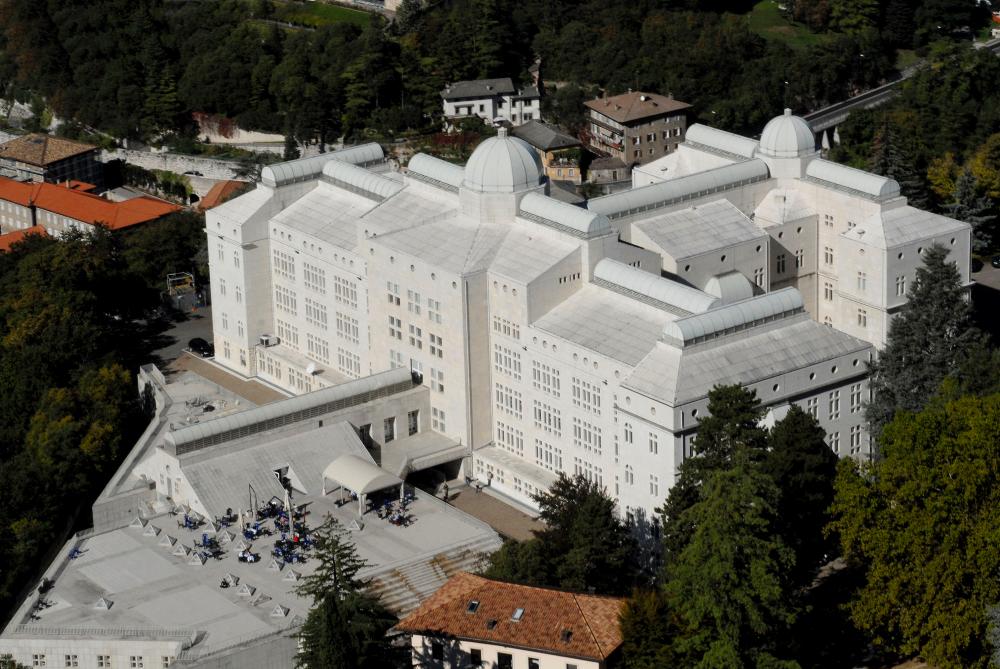
University of Trento, Italy
General Description
This elective is offered during the Fall semester (September–January) and is available to incoming ESST students. The programme combines individual thesis supervision with a tailored selection of courses and seminars supporting the development of students’ thesis projects.
The University of Trento has developed a strong research and teaching profile in the areas of Science in Society, Science Communication, Environmental Communication, and Sustainability Studies. Over the years, this field has benefited from extensive international collaborations, interdisciplinary research activities, and engagement with leading scholarly networks in Science and Technology Studies (STS). The University has also played an active role in the international science communication community, including through its involvement in the editorial activities of Public Understanding of Science, one of the leading journals in the field.
This elective explores the relationships between science, technology, society, and the environment through perspectives drawn from Science and Technology Studies (STS), environmental sociology, environmental policy, and science communication. Particular attention is devoted to the role of scientific expertise in environmental governance, the communication of environmental issues, public engagement with science, and the social dynamics of sustainability transitions.
Several key challenges facing contemporary societies — including climate change, energy transitions, sustainable food systems, biodiversity loss, and environmental degradation — require new forms of interaction between science, policy, and society. Understanding how environmental knowledge is produced, communicated, contested, and used has therefore become increasingly important for both researchers and practitioners.
The elective is organized around three interconnected themes that may individually or jointly form the focus of students’ thesis projects.
Elective Structure
The elective combines coursework, seminars, and individual thesis supervision.
Visiting students may attend courses such as Environmental Politics, Sociology of the Environment, and Science Communication 2.0, depending on course availability and scheduling. These courses are complemented by individual supervision provided by faculty members active in the fields of Science and Technology Studies, environmental sociology, environmental policy, and science communication.
Teaching and working language is English.
Students will be encouraged to develop an independent thesis project connected to one or more of the thematic areas of the elective. The programme provides both theoretical and methodological support for the design and implementation of empirical research projects.
Theme 1: Science, Expertise, and Environmental Governance
This theme examines the role of scientific knowledge and expertise in environmental policy-making and sustainability governance. Topics include the production and use of evidence in public policy, expert advice, risk assessment, environmental regulation, and the relationships between science, politics, and public decision-making.
Theme 2: Environmental Communication and Public Engagement
This theme focuses on how environmental issues are communicated and debated in contemporary societies. Students may explore media representations of environmental problems, public understanding of science, digital communication, science communication practices, and citizen engagement with environmental challenges.
Theme 3: Sustainability, Social Change, and Environmental Movements
The third theme investigates the social dimensions of environmental and sustainability transitions. Particular attention is devoted to environmental movements, sustainable consumption, food systems, energy transitions, climate action, and the ways citizens, organizations, and institutions respond to environmental challenges.
- Bucchi, M. (2004). Science in Society: An Introduction to Social Studies of Science. Routledge.
- Bucchi, M., & Trench, B. (eds.) (2021). Routledge Handbook of Public Communication of Science and Technology (3rd edition). Routledge.
- Hansen, A., & Cox, R. (eds.) (2015). The Routledge Handbook of Environment and Communication. Routledge.
- Hackett, E. J., Amsterdamska, O., Lynch, M., & Wajcman, J. (eds.) (2008). The Handbook of Science and Technology Studies. MIT Press.
Additional readings will be selected according to students’ research interests and thesis topics.
List of Possible Supervisors
- Prof. Massimiano Bucchi – Science and Technology Studies, Science Communication
- Prof. Attila Bruni – Science and Technology Studies, Technology and Innovation Studies
- Prof. Giuseppe Veltri – Digital Media, Environmental Communication
- Prof. Lorenzo Beltrame – Science and Technology Studies, Innovation, Bioeconomy
- Prof. Emanuela Bozzini – Environmental Policy, Environmental Communication
- Prof. Francesca Forno – Food Policy, Sustainable Consumption
- Prof. Katia Pilati – Social Movements, Environmental Issues
- Prof. Natalia Magnani – Environmental Sociology, Energy Policy
Additional contributions may be provided by Dr. Alberto Brodesco (Head of the Media and Film Laboratory) and Cristina Rigutto, MBA (Science Communication Specialist).
- Public perceptions of science and technology
- Environmental communication and climate change communication
- Public engagement with science, technology, and environmental issues
- Evaluation of public participation initiatives
- Science museums, science centres, and informal science learning
- Media coverage of science, technology, and environmental controversies
- Social media and digital communication of science and environmental issues
- Scientific expertise and environmental governance
- Environmental movements and climate activism
- Food, sustainability, and consumption practices
- Citizen attitudes and behaviours related to energy and environmental transitions
Research Environment and Fieldwork Opportunities
The University of Trento offers excellent research facilities, including a well-equipped university library with extensive collections in sociology, STS, environmental studies, and science communication.
Students may also benefit from the opportunities offered by MUSE – the Science Museum of Trento, an internationally recognized institution active in science communication, environmental education, citizen engagement, and sustainability-related projects. MUSE can provide opportunities for fieldwork, internships, and empirical research related to science and environmental communication.
Additional Language Requirements
No additional language requirements beyond the English proficiency requirements of the ESST programme. However, a basic knowledge of Italian may be advantageous for students planning to conduct fieldwork, interviews, or participant observation with local stakeholders.
Maximum Number of Students
Admission is subject to the availability of supervision.
Coordinator of Elective
Prof. Lorenzo Beltrame, Department of Sociology and Social Research, University of Trento, Italy — lorenzo.beltrame@unitn.it
Prof. Emanuela Bozzini, Department of Sociology and Social Research, University of Trento, Italy — emanuela.bozzini@unitn.it
Accommodation and International Affairs
International students are supported before and during their stay by the University of Trento International Office, which provides assistance with accommodation, administrative procedures, and integration activities. Further information is available at unitn.it/en/international.